
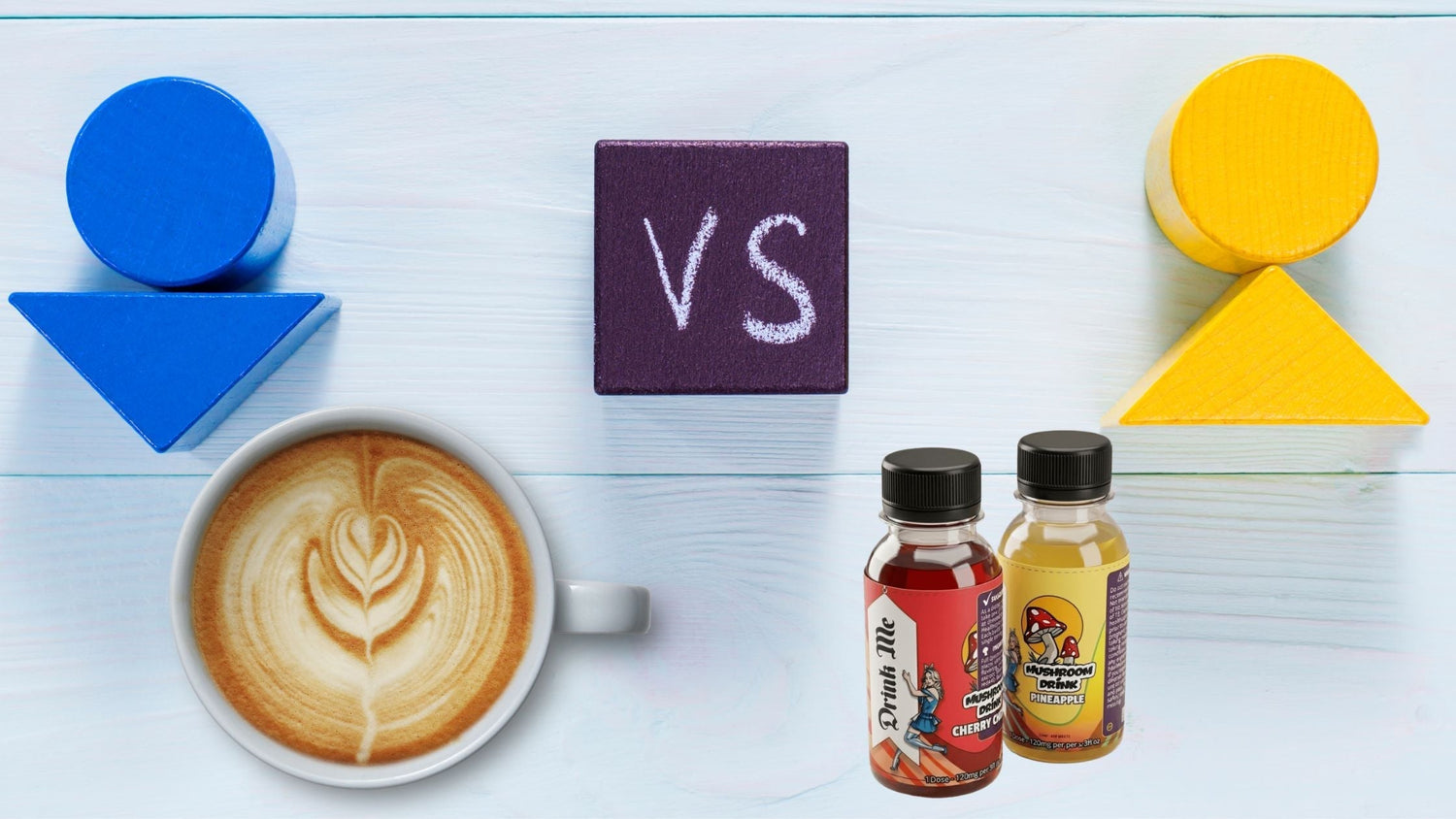
If you drink coffee every day and have been hearing about mushroom drinks, you're probably wondering whether the switch is worth it.
This guide breaks down everything you need to know about mushroom drinks vs coffee, from caffeine levels and flavor to what the research actually supports, so you can make a decision based on facts rather than hype.
Quick Answer: Should You Switch from Coffee to Mushroom Drinks?
Here's the short version. Mushroom coffee blends ground coffee beans with functional mushroom extracts like lion's mane and chaga, giving you a cup that still contains caffeine but typically about half as much as regular coffee. Mushroom drinks, on the other hand, can be entirely caffeine free or very low in caffeine, often built on a cacao, tea, or herbal base with adaptogens and mushroom extracts for mood and focus support.

If you love a strong caffeine kick and bold coffee flavor, traditional coffee still does that job better than anything else. But if you're sensitive to caffeine, deal with jitters, experience digestive issues from coffee's acidity, or want to explore functional mushrooms for cognitive support and stress relief, mushroom drinks are worth trying.
Here's the quick comparison:
-
Regular coffee delivers ~95-100 mg caffeine per 8 oz cup with strong, acidic flavor
-
Mushroom coffee blends typically contain ~40-60 mg caffeine with a milder, earthier taste
-
Non-coffee mushroom drinks range from 0-35 mg caffeine and offer a smoother, gentler experience
-
Mushroom coffee may include adaptogens to reduce jitters and anxiety, while coffee alone does not
The Wonderland Mushroom Drink Duo Pack is one example of a cacao-based mushroom drink designed for focus and calm energy without relying on heavy caffeine. This article is written from the perspective of Wonderland Chocolates, a D2C brand producing precision-dosed, lab-tested functional mushroom confections and drinks for wellness-focused adults.
What Are Mushroom Drinks and Mushroom Coffee, Exactly?
Functional mushrooms are non-psychoactive fungi valued not for culinary flavor but for their bioactive compounds, including beta-glucans, triterpenoids, hericenones, and cordycepin. They're distinct from culinary mushrooms like button or portobello. The species you'll see most often in mushroom beverages are lion's mane, chaga mushrooms, reishi mushroom, and cordyceps mushrooms.
Mushroom coffee is exactly what it sounds like: ground coffee blended with dried or extracted mushrooms. The result is a product that mushroom coffee blends ground coffee with mushroom extracts, and you brew it just like your normal cup. Most mushroom coffee brands offer instant sachets or fine powder blends that dissolve in hot water.
Mushroom drinks are a broader category. They include mushroom hot chocolate, cacao elixirs, mushroom matcha, and caffeine free blends that might contain l theanine, adaptogens, or spices, all without any coffee beans. This is the lane Wonderland Chocolates operates in, formulating precision-dosed, lab-tested wellness beverages focused on taste and mood support rather than simply copying coffee.

Most mushroom coffee still contains caffeine from the coffee base, while many mushroom drinks can be truly caffeine free or very low in caffeine. And to be clear: neither mushroom coffee nor mushroom drinks contain psilocybin. These products use legal, non-intoxicating functional mushrooms for overall wellness. If you're curious about legality, Wonderland has a detailed breakdown in their guide on whether mushroom chocolate bars are legal.
Regular Coffee 101: What You're Comparing Against
Regular coffee comes from roasted Coffea arabica or robusta beans, brewed as espresso, drip, French press, or instant. A standard 8 oz cup of drip coffee contains roughly 80-100 mg of caffeine. Organic coffee and ground coffee from specialty roasters may vary slightly, but the caffeine range stays consistent.
The classic coffee experience is familiar: bold aroma, bitter and acidic notes, and an immediate energy spike. Regular coffee is associated with improved alertness and cognitive function due to caffeine blocking adenosine receptors in the brain, which delays drowsiness and sharpens reaction time. Regular coffee delivers a quick caffeine kick and energy boost.

Research backs several long-term benefits too. Moderate coffee consumption has been linked to lower risks of chronic diseases, including type 2 diabetes and Parkinson's disease, based on large observational studies cataloged in the National Library of Medicine.
But regular coffee has strong, bold flavors and higher acidity, which means common downsides for many drinkers: jitters, anxiety, acid reflux, digestive issues, afternoon crashes, and disrupted sleep, especially if you're sensitive to caffeine. Coffee is a powerful stimulant tool, while mushroom drinks aim for smoother, more balanced support for cognitive function and overall wellness.
Mushroom Coffee vs Mushroom Drinks vs Regular Coffee: Key Differences
Here's a practical breakdown of how these three options compare across the factors that matter most.
|
Factor |
Traditional Coffee |
Mushroom Coffee |
Non-Coffee Mushroom Drinks |
|---|---|---|---|
|
Base ingredients |
Ground coffee beans |
Ground coffee + mushroom extracts |
Cacao, tea, herbs, adaptogens |
|
Caffeine per 8 oz |
~95-100 mg |
~40-60 mg |
0-35 mg |
|
Adaptogens/l theanine |
No |
Sometimes |
Often included |
|
Flavor profile |
Bold, bitter, acidic |
Milder, earthy, smooth |
Chocolatey, spiced, creamy |
|
Best for |
Strong energy, fast alertness |
Focus with less caffeine |
Caffeine-free calm, gut-friendliness |
|
Functional mushroom content |
None |
Lion's mane, chaga, reishi, etc. |
Lion's mane, chaga, reishi, etc. |
Mushroom coffee may include adaptogens to reduce jitters and anxiety, while still delivering meaningful caffeine. Non-coffee mushroom drinks, including cacao-based options from Wonderland Chocolates, offer a steady energy boost without the spike-and-crash pattern. The caffeine content in mushroom coffee varies by brand and blend, so checking labels is essential.
Health Benefits: What the Science Actually Says
Many mushroom coffee health claims are promising but still emerging. Here's what's important to understand: functional mushroom blends are often marketed for their health benefits but lack substantial evidence from large, long-term clinical trials. Most research comes from studies on individual medicinal mushrooms, in test tubes, animal models, or small human studies, not from studies on branded mushroom coffee or drinks. Many mushroom coffee health claims are based on studies of raw mushrooms, not brewed coffee.
That said, the proposed health benefits are grounded in real science. Let's look at what the evidence actually shows, and where it falls short.
Mushroom Coffee & Drinks: Potential Health Benefits
Lion's mane may improve cognitive function and reduce stress. Animal studies show its compounds stimulate nerve growth factor (NGF) synthesis and promote neurogenesis. In a Japanese clinical trial, older adults with mild cognitive impairment took approximately 3 grams per day of organic lion's mane extract over 16 weeks and showed improvements in memory and recognition tests. These benefits appear to build over consistent use rather than working as a one-off drink. Lion's mane supports cognitive health and mental clarity, making it a common ingredient in blends targeting focus.
Chaga mushrooms are rich in antioxidants and may reduce inflammation. A study on human lymphocytes found that chaga extracts reduced oxidative DNA damage by approximately 55% under stress conditions. Chaga also shows immunomodulatory effects in animal models. However, chaga has high oxalate content, which could increase kidney stone risk in susceptible individuals.

Reishi mushrooms may support immune health and reduce stress. A randomized, double-blind, placebo-controlled trial found that beta-glucan from ganoderma lucidum taken daily for 84 days significantly increased immune cell populations including T-cells and NK cells in healthy adults. Reishi is also traditionally used for sleep support and stress management.
Cordyceps may enhance physical endurance and reduce fatigue. A controlled 12-week trial in older adults showed that standardized Cordyceps (Cs-4, ~1g three times daily) improved metabolic and ventilatory thresholds by approximately 8-10% compared to placebo.
Some formulas also include l theanine, either naturally from tea or as an added amino acid, to smooth out any remaining caffeine's stimulating effects and promote calm focus. Wonderland Chocolates takes this approach by combining lab-tested mushroom blends with precision dosing, so each serving of their mushroom drinks and confections delivers a consistent, predictable experience.
Medicinal mushrooms can help with immune support and stress management, but these are dietary supplements and functional foods, not replacements for medical treatment. Consult your healthcare provider before making major changes, especially if you're on medication.
Regular Coffee: Proven Benefits and Limits
Coffee's short-term benefits are well-documented: increased alertness, faster reaction time, and mood improvements due to caffeine and antioxidants. These effects are immediate and dose-dependent.
Long-term observational research associates moderate intake (roughly 2-4 cups per day) with reduced risk of type 2 diabetes, Parkinson's disease, certain liver conditions, and even improved all-cause mortality.
The limits are equally clear. At higher doses, returns diminish while side effects increase. Anxiety-prone individuals experience worsened symptoms. And caffeine intake after early afternoon (given caffeine's 3-7 hour half-life) can meaningfully disrupt sleep quality. Coffee is a proven tool, but not without trade-offs.
Caffeine Content: How Much Energy Are You Really Getting?
Caffeine content is one of the most important practical differences when choosing between these beverages. Here are the numbers:
-
Regular coffee usually contains about 100 milligrams of caffeine per cup (8 oz drip)
-
Mushroom coffee blends often contain about half the caffeine of regular coffee. Some mushroom coffees have around 50 milligrams of caffeine per serving
-
Non-coffee mushroom drinks range from 0-40 mg depending on whether they include tea, cacao, or green coffee extract
-
Some mushroom coffee blends can be caffeine-free or very low in caffeine, but most are not truly caffeine free unless specifically labeled
Mushroom coffee typically contains less caffeine than regular coffee, but it's rarely zero. The lower caffeine content combined with adaptogens and compounds like l theanine creates a smoother, sustained feeling rather than the spike-and-crash pattern common with a strong brew of ground coffee.

If you're highly sensitive to caffeine, pregnant, nursing, or on stimulant medications, always check labels carefully before choosing any mushroom coffee or drink.
Wonderland's mushroom drink duo is designed for gentle focus and mood support rather than a high-caffeine jolt, sitting at the low end of the caffeine spectrum alongside other cacao-based blends.
Who Should Choose Caffeine-Free or Low-Caffeine Options?
These groups tend to benefit most from reduced caffeine intake:
-
People with anxiety or panic disorders
-
Those with insomnia or poor sleep quality
-
Individuals with heart rhythm sensitivities
-
Pregnant or nursing people (with doctor guidance)
-
Anyone tapering off high daily caffeine intake
Switching one afternoon coffee to a mushroom drink can meaningfully reduce overall caffeine load while still supporting focus and cognitive function. Caffeine free mushroom drinks also work well as evening rituals for relaxation, especially if they include reishi or calming botanicals.
Taste and Experience: Mushroom Coffee Taste vs Coffee and Mushroom Drinks
Let's address the question everyone asks: does mushroom coffee taste like mushrooms floating in your cup? No. Mushroom coffee taste is closer to regular coffee than most people expect. It has similar roast characteristics but with milder, earthier, sometimes slightly nutty undertones. Mushroom coffee has a milder, smoother taste than regular coffee, and mushroom coffee reduces bitterness compared to regular coffee. Mushroom coffee can taste earthy due to added ground mushrooms, but the flavor rarely dominates.
High-quality mushroom coffee brands use extraction methods that integrate smoothly with the coffee base. You won't see mushrooms floating in your mug.
Non-coffee mushroom drinks are a different experience entirely. Cacao-based drinks offer rich chocolate notes. Spiced chai-style blends add warmth. Creamy lattes with oat milk feel indulgent. A cacao plus lion's mane or cacao plus chaga combination can be more approachable for coffee lovers who want a familiar, comforting flavor while shifting away from heavy caffeine.

Wonderland Chocolates focuses heavily on flavor: gourmet chocolate, carefully balanced sweetness, and smooth textures. Their mushroom drinks and edibles are designed to feel like treats rather than health tonics. If the taste of mushroom content concerns you, this approach removes most of the barrier.
To transition gradually, try replacing your afternoon cup with a mushroom drink for one week. You can also go half coffee, half mushroom blend as a stepping stone to let your palate adjust.
How to Make Mushroom Coffee and Mushroom Drinks at Home
Preparation is straightforward:
-
Mushroom coffee can be brewed using traditional coffee methods. Use a French press, drip machine, or pour-over with pre-blended mushroom coffee grounds, just as you would with any organic coffee
-
Powdered mixes can be stirred into water or milk for quick preparation. Most instant mushroom coffee and drink powders dissolve in 8-12 oz of hot water
-
Liquid extracts can be added to coffee for enhanced benefits. A dropper of chaga extracts or lion's mane tincture in your morning cup is a simple upgrade
-
You can add cream, oat milk, or a small amount of sweetener if you're adjusting to the taste, then reduce additives over time
Mushroom drink powders also work well in smoothies, protein shakes, or over ice as a summer coffee substitute. The Wonderland mushroom drink duo is a ready-to-use option that mixes quickly with hot water or warmed milk, making it easy to fold into your daily routine.
Side Effects, Safety, and Who Should Be Careful
Both coffee and mushroom products can have side effects and interactions. Here's what to watch for.
Common coffee side effects:
-
Jitteriness and rapid heartbeat
-
Anxiety spikes, especially in sensitive individuals
-
Digestive issues like acid reflux and stomach upset
-
Sleep disruption from afternoon or evening consumption
Potential mushroom-related concerns:
-
Mushroom coffee can cause gastrointestinal discomfort. Some users report mild digestive issues from mushroom coffee, particularly when starting
-
Allergic reactions to mushroom coffee have been reported, though they're uncommon
-
Chaga's high oxalate content may increase kidney stone risk in susceptible people
-
Excessive reishi mushroom consumption may lead to liver toxicity at very high doses over extended periods
-
Mushroom coffee can interact with anticoagulants and immunosuppressants
People with kidney disease, autoimmune conditions, or those taking multiple medications should consult their healthcare provider before making mushroom drinks a daily habit. These are important health issues to consider, especially with compounds that modulate immune cells and reduce inflammation.

Wonderland Chocolates uses lab-tested, precisely dosed, THC-free formulas manufactured under Good Manufacturing Practices. This reduces variability and contamination risks compared with unverified products. You can review their lab reports directly. Still, start with small servings and track how your body responds over a week or two (energy, focus, digestion, sleep) before increasing intake. For dosing guidance on their edibles, check the mushroom chocolate dosing guide.
Cost, Availability, and How to Choose a Quality Mushroom Beverage
Mushroom drinks are generally more expensive than traditional coffee. A home-brewed cup of regular coffee runs about $0.25-$1.00, while mushroom coffee and drinks often cost $1-$3+ per serving due to mushroom extraction, testing, and smaller-scale production.
Mushroom products are primarily available online and in specialty wellness shops, though availability has expanded significantly since 2020 with more mushroom coffee brands and functional beverage companies entering the market.
When shopping, look for:
-
Clear labeling of specific functional mushrooms used (lion's mane, chaga, reishi, cordyceps)
-
Documented extraction methods (dual extraction for both water- and alcohol-soluble compounds)
-
Transparent caffeine content and mushroom content per serving
-
Organic or clean ingredient lists, gluten free when relevant
-
Third-party lab testing for heavy metals and contaminants
Avoid blends that hide behind "proprietary" mushroom mixes without disclosing actual amounts or species. Vague labels are a red flag in a category where the dose of bioactive compounds matters enormously.
Pros and Cons: Mushroom Drinks vs Coffee at a Glance
Mushroom Drinks - Pros:
-
Smoother, sustained energy without spikes or crashes
-
Potential health benefits for cognitive support, immune support, and stress management
-
Lower or zero caffeine content, gentler on digestion
-
Pleasant ritual without overstimulation
-
Immune boosting properties from beta-glucans and other bioactive compounds
Mushroom Drinks - Cons:
-
Higher price per serving
-
Taste adjustment period for some drinkers
-
Less immediate "buzz" than strong coffee
-
Many health claims still need larger human studies for confirmation
-
Potential interactions for people with specific health conditions
Regular Coffee - Pros:
-
Bold flavor and satisfying ritual
-
Fast, intense energy and improved alertness
-
Wide availability and low cost
-
Robust research base supporting overall health associations
-
Rich in antioxidants and beneficial compounds
Regular Coffee - Cons:
-
Jitters, anxiety, and energy crashes
-
Digestive issues and acid reflux
-
Caffeine dependence and tolerance buildup
-
Sleep disruption if consumed late in the day
A hybrid strategy works well for many people. Try a morning coffee for the strong energy you need, then an afternoon mushroom drink for sustained focus without compromising sleep. You don't have to go all-or-nothing.
FAQs: Mushroom Coffee, Mushroom Drinks, and Everyday Use
Does mushroom coffee taste like mushrooms? No. Most mushroom coffee blends taste primarily like coffee with mild earthy notes and reduced acidity. Cacao-based mushroom drinks taste more like hot chocolate than espresso. The fine powder dissolves completely, so there are no mushrooms floating in your cup.
Is mushroom coffee or a mushroom drink better for cognitive function? Both can support cognitive health, but through different mechanisms. Coffee provides acute alertness via caffeine, while lion's mane and other mushroom extracts may support longer-term cognitive function through nerve growth factor stimulation. The best choice depends on whether you want immediate stimulation or sustained support.
Is mushroom coffee actually healthier than regular coffee? It's not that simple. Coffee has decades of research supporting its potential health benefits. Mushroom coffee offers less caffeine plus the proposed health benefits of functional mushrooms, but clinical trials on the drinks themselves (not just isolated mushrooms) are limited. Both can be part of a healthy daily routine.
Are there truly caffeine free mushroom coffee options? Some mushroom coffee blends can be caffeine-free, but most contain reduced amounts of caffeine from the coffee base. If you want truly caffeine free options, look for mushroom drinks built on cacao, herbal, or water bases instead of ground coffee.
Can mushroom drinks replace my multivitamin or medication? No. Functional mushrooms are dietary supplements and functional foods, not replacements for medical treatment. They support overall wellness as part of a broader lifestyle. Wonderland Chocolates' products are non-psychedelic and THC-free, focused entirely on legal functional mushrooms. Always talk to your healthcare provider before adding any new supplement to your routine.
Can I mix mushroom coffee with regular coffee? Yes. This is a common approach for gradually reducing caffeine intake while adding functional mushrooms to your brew. Start with a 50/50 blend and adjust the ratio based on how your body responds.
Conclusion: How to Decide Between Mushroom Drinks and Coffee
The decision comes down to a few key factors: your desired caffeine level, sensitivity to jitters or digestive issues, interest in functional mushrooms for cognitive support and immune support, and what flavor you actually enjoy drinking every day.
There's no single winner. Mushroom drinks and coffee can complement each other in a daily routine, or one can replace the other depending on your needs. If you thrive on strong caffeine and love the bold flavor of a dark roast, keep your morning coffee. If you want smoother energy, less acidity, and the potential benefits of lion's mane, chaga, reishi, and cordyceps, a mushroom drink is a solid addition.

Start with one daily swap: replace an afternoon coffee with a lion's mane or chaga-containing drink and track how your focus, mood, and sleep respond over two weeks. If you're ready to try functional mushrooms without sacrificing taste, explore Wonderland Chocolates' mushroom-infused confections and mood-enhancing drinks. The Wonderland Mushroom Drink Duo Pack is a convenient starting point, with precision-dosed, lab-tested blends that make it easy to see what mushroom drinks can do for your overall health and daily energy.